DANBLE
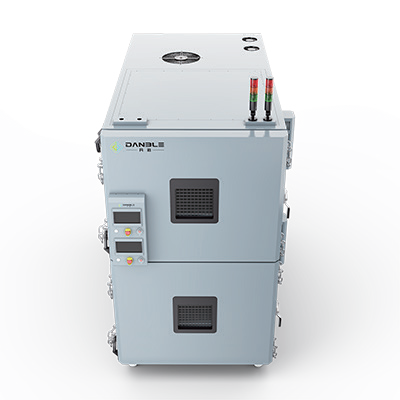
DANBLE Temeprature Test Chamber with integrated Charging/Discharging Test System
DANBLE Temeprature Test Chamber with integrated Charging/Discharging Test System
Quantity
Couldn't load pickup availability
A Temperature Test Chamber integrated with a Charging/Discharging Test System is a specialized laboratory setup used primarily for the research, development, and quality assurance of batteries (lithium-ion, solid-state, etc.) and electronic components.
It allows engineers to evaluate how batteries perform under various environmental conditions while simultaneously undergoing electrical cycling.
Core Components
- Environmental (Temperature) Chamber: A controlled enclosure capable of maintaining precise temperatures, typically ranging from -70°C to +180°C. It simulates extreme weather conditions to test the thermal stability and safety of the battery.
- Battery Cycler (Charge/Discharge System): An external power electronic unit connected to the battery inside the chamber. It manages the electrical flow, simulating real-world usage by charging the battery to full capacity and discharging it to specific levels.
- BMS Integration & Data Acquisition: The system monitors vital signs such as voltage, current, internal resistance, and surface temperature. It often communicates with the Battery Management System (BMS) to ensure the test stays within safety limits.
Key Testing Capabilities
- Capacity Retention: Measuring how much energy a battery holds at freezing or scorching temperatures.
- Cycle Life Testing: Repeatedly charging and discharging a battery over weeks or months to predict its lifespan.
- Thermal Runaway Analysis: Observing how a cell reacts to "heat soak" conditions and identifying the temperature at which a catastrophic failure might occur.
- C-Rate Performance: Testing how fast a battery can be charged (Fast Charging) without overheating or degrading the chemistry.
Safety Features
Because batteries can be volatile during testing, these systems are equipped with Hazard Level protections, including:
- Fire Suppression: CO2 or N2 purging systems.
- Pressure Relief: Explosion-proof vents (blow-out disks) to release gas if a cell vents.
- Gas Detection: Sensors for Carbon Monoxide (CO) or Hydrogen (H2).
Specification Sheet