DANBLE
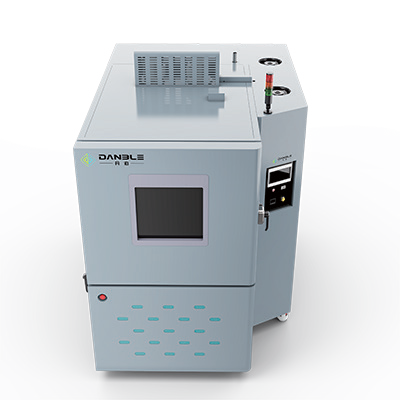
DANBLE Rapid Temperature Change Test Chamber
DANBLE Rapid Temperature Change Test Chamber
Couldn't load pickup availability
A Rapid Temperature Change Test Chamber (often called an ESS or Environmental Stress Screening chamber) is a specialized environmental enclosure designed to subject a product to extreme thermal transitions in a very short period.
Unlike a standard climatic chamber that might change temperature at 1°C to 2°C per minute, a rapid change chamber is engineered for high-performance cooling and heating, typically ranging from 5°C/min to 25°C/min (or even higher in specialized models).
Core Purpose: Reliability & Stress Testing
The primary goal is to uncover "latent defects"—manufacturing or design flaws that wouldn't be visible under normal operating conditions but appear after the expansion and contraction caused by thermal shock.
Key Technical Characteristics
- High-Capacity Airflow: Utilizes powerful blowers and reinforced ducting to ensure the air temperature inside the workspace changes uniformly and stays consistent across the test specimen.
- Advanced Refrigeration: Often uses dual-stage (cascade) refrigeration systems or liquid nitrogen (LN2) injection to achieve rapid pulldown rates.
- Thermal Stress Control: The system allows for "Linear" (constant speed) or "Non-linear" (maximum speed) temperature ramps to meet specific military or industrial standards (such as MIL-STD-810 or IEC 60068).
Common Applications
| Industry | Typical Use Case |
| Automotive | Testing ADAS sensors, battery modules, and ECU soldering joints for durability against engine heat and winter cold. |
| Aerospace | Simulating the rapid transition from ground-level heat to the extreme cold of high-altitude flight. |
| Electronics | Identifying weak solder points or mismatched thermal expansion coefficients ($CTE$) in PCBs. |
| Energy | Testing the resilience of power inverters and energy storage components under fluctuating loads. |
Safety & Protection
Because these chambers operate at high power and speed, they include:
- Independent Over-temperature Protection: A hardware-based cutout to prevent thermal runaway.
- Specimen Protection: A sensor attached directly to the product to ensure the chamber doesn't "overshoot" and damage the device under test.
Specification Sheet