1
/
of
1
DANBLE
DANBLE E-Motor Test Bench integrated with Test Chamber
DANBLE E-Motor Test Bench integrated with Test Chamber
Quantity
Couldn't load pickup availability
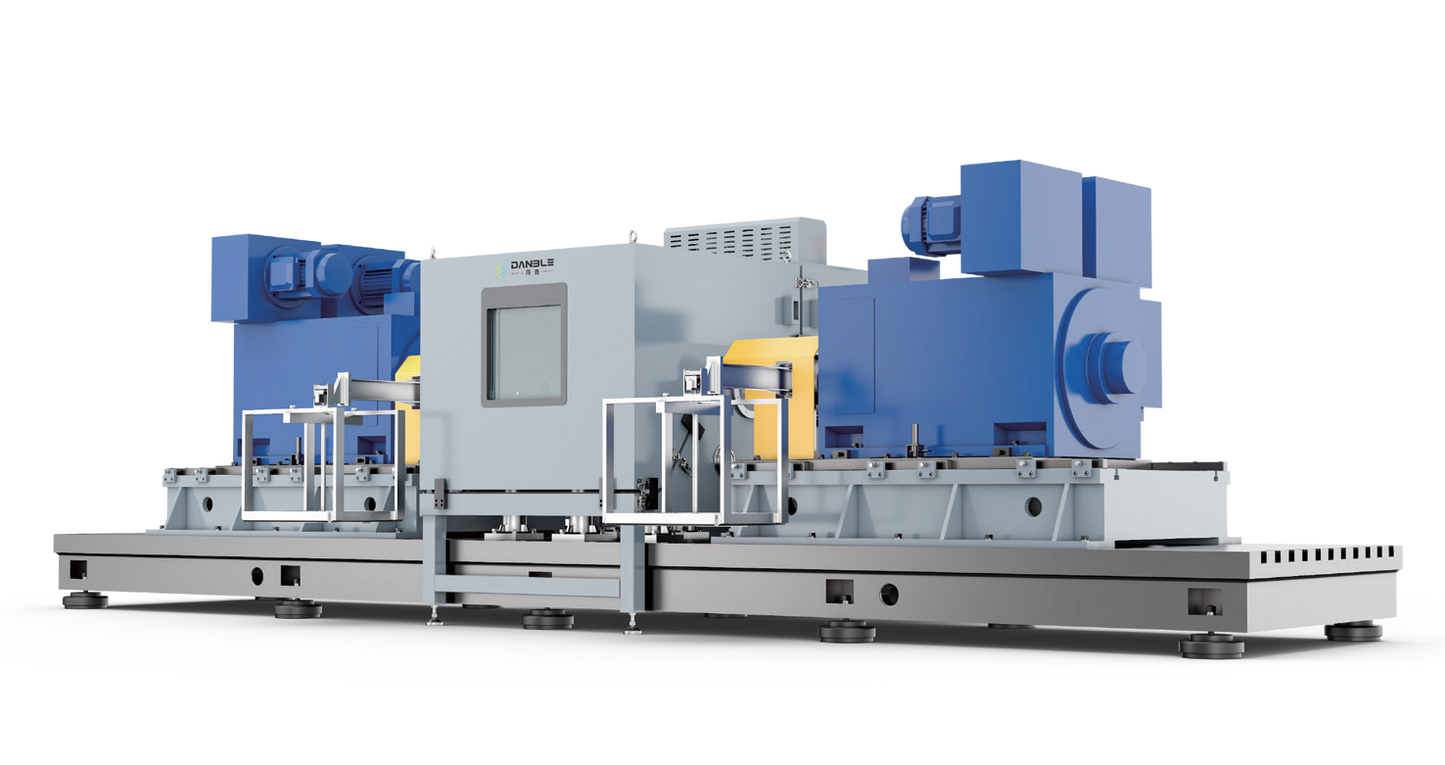
E-Motor Test Bench with Integrated Test Chamber is a high-performance validation system used to test electric motors (traction motors) under both mechanical load and extreme environmental conditions.
By placing the motor inside a temperature-controlled enclosure while it is coupled to an external dynamometer, engineers can simulate real-world driving cycles—such as high-speed highway cruising in a desert or stop-and-go traffic in a sub-zero winter.
System Architecture
The setup consists of two primary zones separated by a thermal barrier:
- The Test Chamber (Internal): A temperature-controlled "box" that houses the Unit Under Test (UUT). It maintains precise thermal conditions to evaluate how the motor's magnets, windings, and insulation behave at extreme temperatures.
- The Dynamometer (External): A high-speed electric "load motor" located outside the chamber. It is connected to the UUT via a specialized high-speed shaft that passes through a thermal seal in the chamber wall.
Key Technical Capabilities
- Dynamic Loading: The external dynamometer applies torque and speed profiles to simulate vehicle inertia, hill climbs, and regenerative braking.
- Thermal Range: Typically operates from -40°C to +150°C, allowing for the detection of "hot spots" or cooling system inefficiencies.
- Coolant & Oil Conditioning: Integrated systems provide temperature-controlled coolant or lubrication oil to the motor, independent of the air temperature inside the chamber.
- High-Speed Operation: Modern benches for EV motors often support speeds exceeding 20,000 RPM.
Safety & Integration
- Vibration Monitoring: Sensors detect imbalance in the shaft or bearings, which can be exacerbated by thermal expansion.
- Inverter Integration: The system typically includes a high-voltage DC simulator to power the motor, allowing for "Battery-to-Wheel" efficiency testing.
- Safety Interlocks: Emergency stops and speed limiters prevent damage if a mechanical failure occurs during high-speed testing.